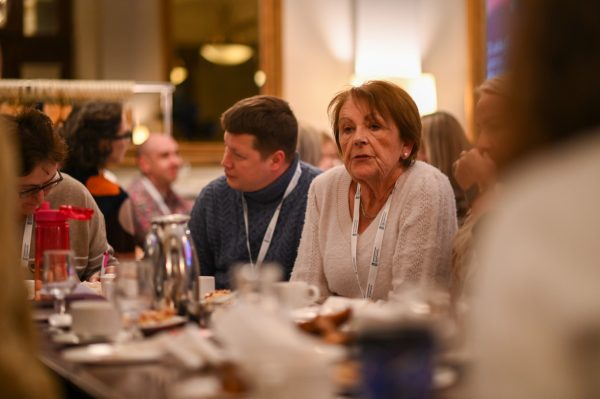
What is your name, member group and representative role?
My name is Siobhán Guyatt, and my member group is Ballymun Law Centre. Although I am now on the Centre’s Board, the Centre joined the PPN before I became involved. I have a seat on the Finance Strategic Policy Committee (SPC), and I also sit on the PPN Secretariat.
Why did your group become a member of the PPN?
Initially, for funding opportunities. The Centre also wanted to network with the other groups in Ballymun and the north side of Dublin, and in Dublin City in general. Now, the Centre is interested in trying to give back to the PPN in sharing the resources we have with other groups. For example, the Centre organises training for individuals, community groups, and for other PPN members. In the DCU Summer School this year, we presented on mediation skills for other groups. The Law Centre also offers representation, free legal advice, other educational training and rights-based supports. We show people how to make a will for example, which always comes in handy. We also do “mock trials” at Trinity Comprehensive school in Ballymun and we get solicitors to visit groups. We are trying to find equal roads to social justice.
Why did you want to be a PPN Representative on the Finance SPC and be a part of the Secretariat?
I wanted to contribute to the values and objectives of the PPN. I wanted to listen and learn from other members. I wanted to learn from more experienced Reps, and to be a part of something. Something that was ongoing.
What do you hope to achieve?
I would like to think, that even in a small way, that we contribute towards the policies. We can be a voice for local communities, to the benefit of our neighbours and particularly for groups that have been ignored like disability groups, housing groups, older people. I would hope to contribute to one or two achievements.
I’m on the Older Person’s Council and many issues overlap between the PPN, the Finance SPC and the OPC. Many issues then overlap with disability for example transport and housing and access to the city. I would like to get more involved with the PPN’s Disability Thematic Group (DTG), and I will be linking in with this group soon.
How do you report back to your member group, Ballymun Law Centre?
We meet every two months and I’m on the Board and a sub-committee. It depends on the agenda, but I usually report back about the PPN’s work when this allows, sometimes this would be in an informal way.
What advice would you give new member groups?
The key thing is to actively get involved. Initially I would suggest they send one or two of their members to a Plenary in November and May, and also try and attend the training or other events. I would recommend that they go to the PPN/DCU Summer School and get to know other member groups that way. This is both enjoyable and informative. They could also invite the PPN staff to come and visit them, to give a presentation or just have a coffee and a chat. Most of this work is about networking, and that takes time and energy and interest.
How do you make Policy work interesting for new member groups?
Many groups have their own little universe where they meet and do their work and are happy to stay in that one place and not come outside. However, the things we talk about at the policy committees affect all of us. I would like us to do some research to find out which groups are most active and where are they based, and why are they so active? That would be interesting. Also, I would like the PPN to work on one specific project, to help new members find a way into the policies. For example, in the finance committee recently we were talking about a hotel tax or a tourist tax, and I would love for the PPN to issue a statement and say, “we support this fully”. And get as many of the groups as possible to support it.
I sit on a committee, but I am not an expert. I am a representative of the other PPN groups. So I bring that voice, of the people at the coal face, and I present it to the policy makers or the “experts”. They have probably not thought about a lot of the issues facing many of us, and many of our groups. So this is my chance to tell them about it. We need a hotel tax, to fund the council properly.
The “big guns” have the power, but those of us living in a situation will know where the mistakes are being made and we have solutions. The people who live it know best. I would love more PPN groups to feel that “fire in their belly” about a situation and come and get involved in solving those issues. Call it policy, call it a committee, call it whatever, but it’s really that nothing will change if we don’t change it. You can’t be heard if you don’t say anything.
What are the best things about the roles?
I am slowly getting to grips with the wider workings of the PPN and the council and how they sit. Learning about my committee is hard, as it covers a lot of ground and I’m just a volunteer, so I’m not an expert on a lot of these things. However, as I understand more, I find my place for positive input. It’s useful to get to know the other members on the committee and the chair, and a lot happens outside of the meetings. We need to trust each other. We’re all trying to make things better. It’s all very big, that’s the challenge. I find it interesting, and I try and do one thing at a time. I really loved the PPN/DCU Summer School last year, and it was great that my group The Ballymun Community Law Centre was involved in the delivering one session, and…that reminds me. At summer school this year there was one session on AI that I found very interesting, and what I liked was that the lecturer really made the language very accessible. So I could understand all the detail and concept and I wonder if we could translate that into wider PPN work and wider council work. Make things easier to understand. I even told my children all about AI and, I wish I could always speak about the PPN and council work as easily as I did after that class. It’s something to think about.
It would be great to be able to concentrate on one issue, one project and get everyone behind it and make things better. I hope that this can happen in the near future.
What’s the biggest challenge of the role?
The work is very broad, and it can be difficult to know where to start. I try to listen and remember that even small contributions matters. Also, at the start, Council structures can be almost like a different language, so learning how the SPC’s, Secretariat, Plenary, and council departments fit together takes time.
Tell us something people may not know about you
I hate doing interviews.